
 X
X WeiBo
WeiBo WeChat
 Facebook
 LinkedIn
 Reddit
 Bluesky
Integrating Future Factory-to-Factory (F2F) Manufacturing through System of Systems Engineering (SoSE): a framework for capability beyond constituent systems
- Volume
- CitationKatina P, Tang H, Hallioui A. Integrating Future Factory-to-Factory (F2F) Manufacturing through System of Systems Engineering (SoSE): a framework for capability beyond constituent systems. Adv. Manuf. 2026(1):0005, https://doi.org/10.55092/am20260005.
- DOI10.55092/am20260005
- CopyrightCopyright2026 by the authors. Published by ELSP.
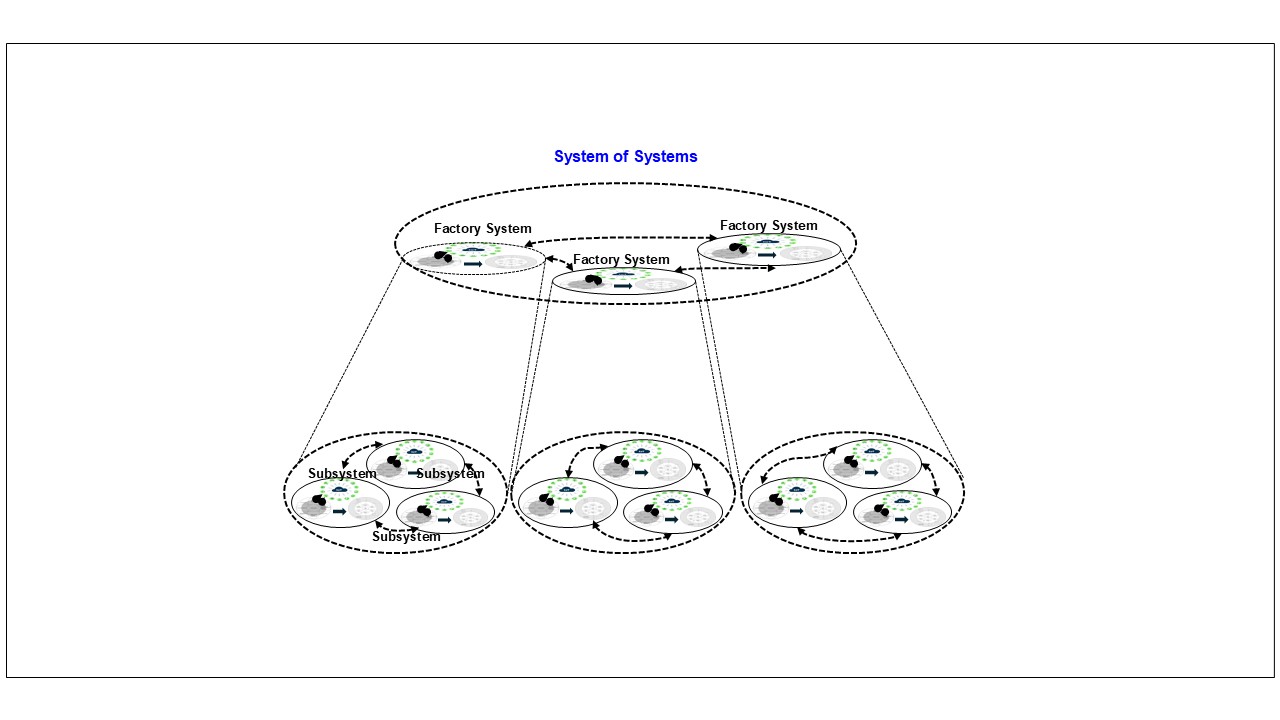
System of Systems Engineering (SoSE) is an emerging discipline focused on the design, integration, and evolution of metasystems—composed of multiple autonomous yet interdependent systems. These systems of systems (SoS) offer capabilities that exceed those of any individual constituent systems by enabling synergistic coordination, interoperability, and dynamic adaptation across diverse operational contexts. This study pursued three primary objectives: (i) to examine the role of integration in enabling emergent capabilities beyond those of individual systems, (ii) to explore SoSE as a framework for orchestrating Future Factory-to-Factory (F2F) Manufacturing, and (iii) to assess the implications of SoSE to address volatile, uncertain, complex, and ambiguous (VUCA) manufacturing environments. Data for this study were drawn from the Web of Science Core Collection—a globally recognized citation database that informs research evaluation and planning across more than 7000 institutions. Our analysis revealed that SoSE is gaining importance as a unifying paradigm for managing enhanced capability of complex, distributed systems characterized by operational and managerial independence, evolutionary development, and emergent behaviors. Findings indicated persistent challenges across technical, operational, economic, governance, and strategic domains, underscoring the need for holistic integration strategies. In the context of Future F2F Manufacturing, SoSE holds a significant promise for enhancing system-wide coordination, resilience, and adaptability. The study concludes by emphasizing the importance of embedding Systems Theory principles to guide the sustainable and scalable integration of interconnected manufacturing ecosystems to maintain viability.
System of Systems Engineering; future manufacturing; interoperability; digital twins; VUCA; cyber-physical systems
