
 X
X WeiBo
WeiBo WeChat
 Facebook
 LinkedIn
 Reddit
 Bluesky
Crosstalk between KRAS and miRNA in cancer
- Volume
- CitationShen R, Zhao Y, Sheng Q, Sun Y, Wang Y. Crosstalk between KRAS and miRNA in cancer. ExRNA 2026(1):0001, https://doi.org/10.55092/exrna20260001.
- DOI10.55092/exrna20260001
- CopyrightCopyright2026 by the authors. Published by ELSP.
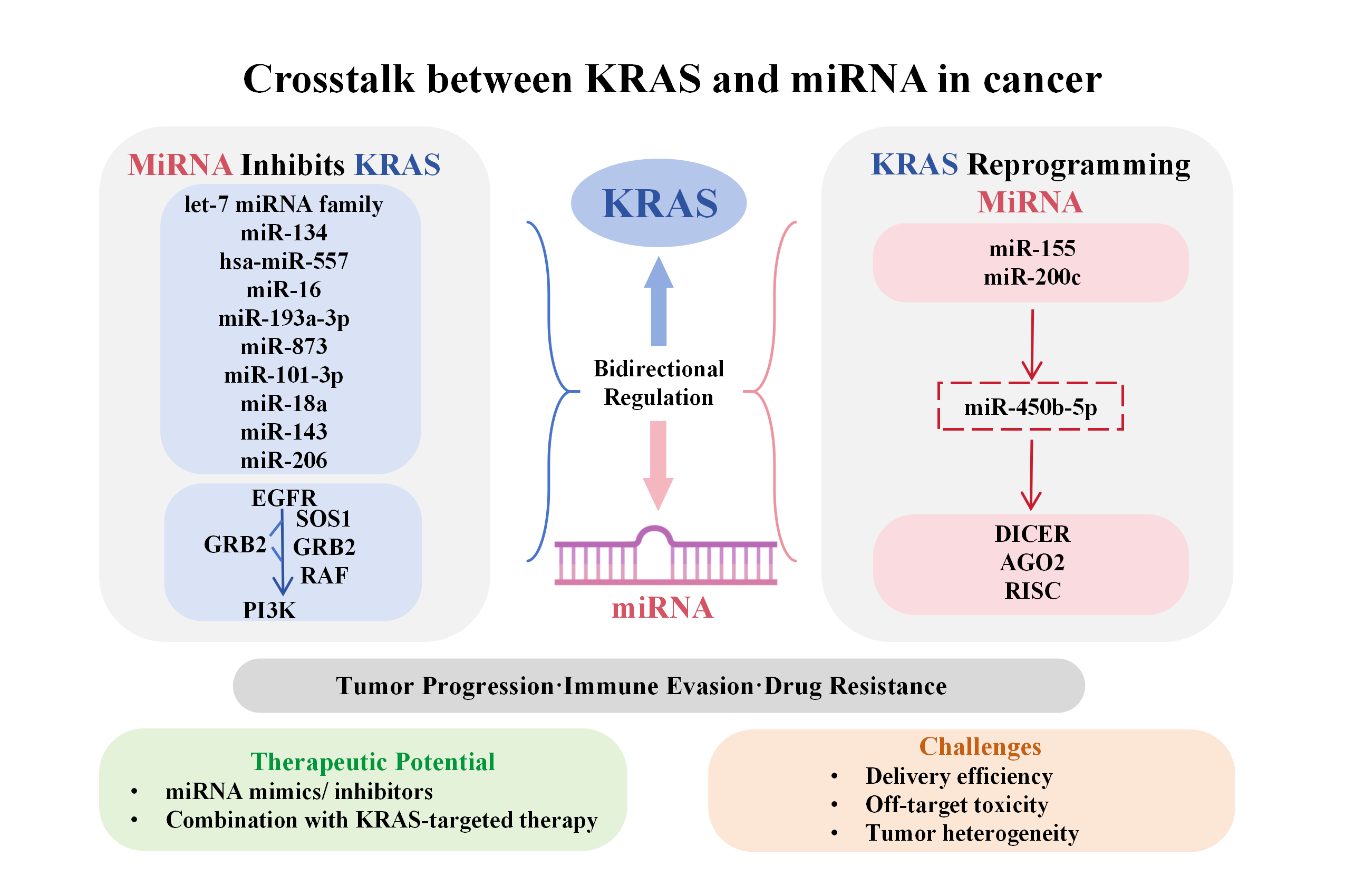
Kirsten RAS viral oncogene homolog (KRAS) is one of the most frequently mutated oncogenes in human cancers. Its mutations result in constitutive activation of the protein, which drives the mitogen-activated protein kinase (MAPK) and phosphoinositide 3-kinase (PI3K) signaling pathways and promotes tumor progression. Meanwhile, microRNAs (miRNAs), as key post-transcriptional regulators, can directly or indirectly modulate the activity of the KRAS signaling network, forming a bidirectional regulatory axis. This review summarizes the complex interplay between KRAS and miRNAs: on one hand, specific miRNAs suppress oncogenic signaling by targeting KRAS or its upstream/downstream effectors; on the other hand, mutant KRAS actively hijacks miRNA biogenesis, processing, and function, leading to a global reprogramming of miRNA expression that drives tumor progression, immune evasion, and drug resistance. In-depth dissection of this dynamic regulatory mechanism not only offers novel insights into the biology of KRAS-driven tumors, but also establishes a theoretical foundation for developing miRNA-based therapeutic interventions.
KRAS; miRNA; oncogenic KRAS signaling; MAPK signaling; colorectal cancer; post-transcriptional regulation
