
 X
X WeiBo
WeiBo WeChat
 Facebook
 LinkedIn
 Reddit
 Bluesky
The respiratory microbiota in lung cancer: bridging dysbiosis, immunomodulatory networks, and therapeutic opportunities
- Volume
- CitationZhao Y, Li S. The respiratory microbiota in lung cancer: bridging dysbiosis, immunomodulatory networks, and therapeutic opportunities. Adv. Cancer Res. 2026(2):0009, https://doi.org/10.55092/acr20260009.
- DOI10.55092/acr20260009
- CopyrightCopyright2026 by the authors. Published by ELSP.
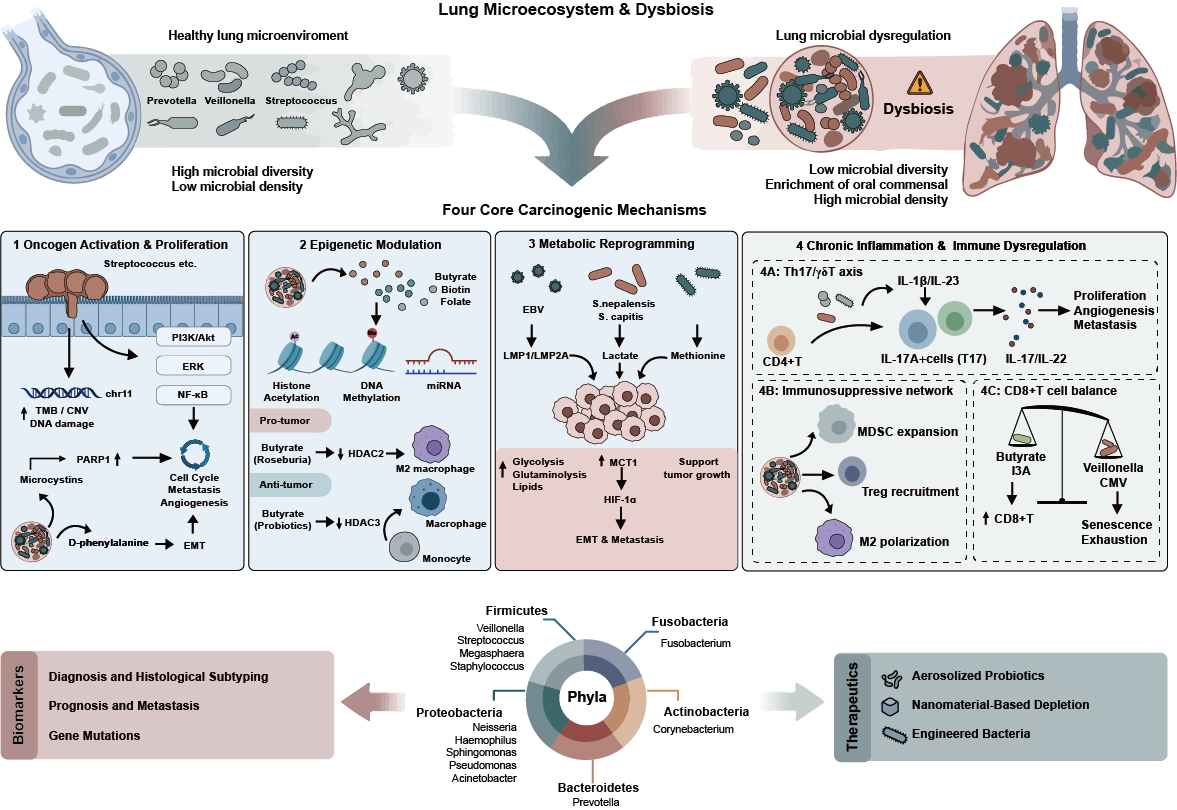
Lung cancer remains the leading cause of cancer‑related mortality worldwide, with limited therapeutic responses and frequent acquired resistance. The respiratory microbiota has recently been recognized as an important regulator of lung cancer. Although most research has concentrated on the gut microbiota, its composition differs substantially from that of the lung microbiota. Emerging evidence indicates that dysbiosis of the airway and intratumoral microbiome contributes to lung oncogenesis, disease progression, and immunotherapeutic outcomes through multiple mechanisms. Therefore, elucidating how microorganisms residing in the respiratory tract affect lung carcinoma development and treatment response may be essential for predicting cancer risk and enhancing therapeutic efficacy and safety. In this review, we discuss the compositional characteristics of the respiratory microbiome, its association with lung cancer, and the potential mechanisms through which the respiratory microbiota contributes to carcinogenesis. We also summarize its potential applications in diagnosis, subtyping, staging, and prediction of treatment response, and explore the feasibility of therapeutic microbiome modulation for developing lung cancer prevention strategies and optimizing treatment.
lung cancer; respiratory microbiome; dysbiosis; tumor microenvironment; immunotherapy
