
 X
X WeiBo
WeiBo WeChat
 Facebook
 LinkedIn
 Reddit
 Bluesky
Cell-free nucleic acids in exhaled breath condensate: emerging non-invasive biomarkers for pulmonary disease and systemic RNA communication
- Volume
- CitationZen JL, Hanna GB. Cell-free nucleic acids in exhaled breath condensate: emerging non-invasive biomarkers for pulmonary disease and systemic RNA communication. ExRNA 2026(2):0006, https://doi.org/10.55092/exrna20260006.
- DOI10.55092/exrna20260006
- CopyrightCopyright2026 by the authors. Published by ELSP.
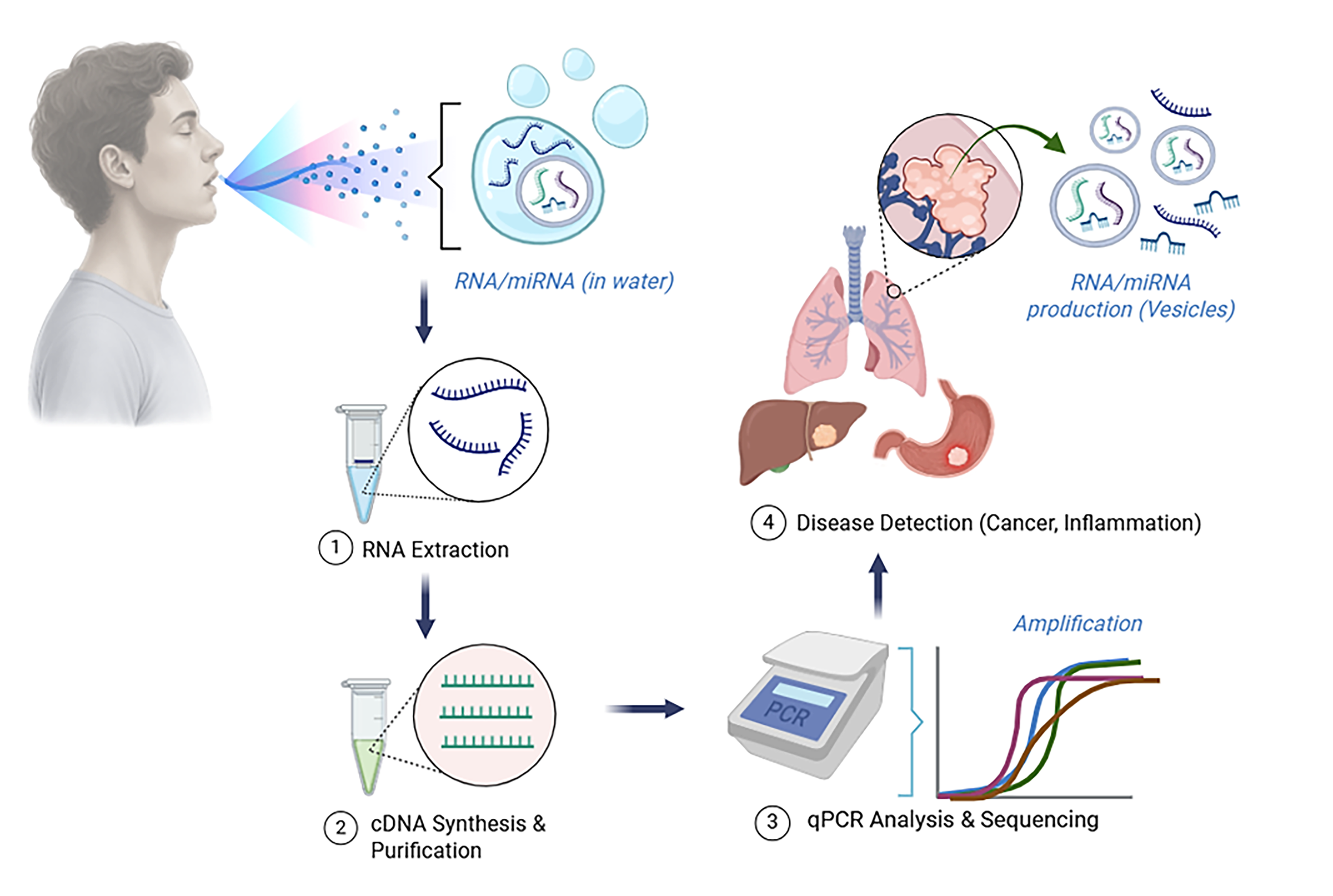
Cell-free nucleic acids, particularly microRNAs (miRNAs), have emerged as promising diagnostic biomarkers for disease detection, including cancer, owing to their relative stability, disease-specific expression patterns, and functional involvement in disease pathogenesis. Exhaled breath condensate (EBC) is a non-invasively collected biofluid obtained through tidal breathing and has been shown to contain extracellular nucleic acids derived from the respiratory tract, present in both extracellular vesicle (EV)-associated and EV-free forms, and presents distinctive features that, in some contexts, offer practical advantages over other emerging breath-based diagnostic approaches. This narrative review synthesises previous advances in the characterisation and applications of cell free nucleic acids in EBC as potential diagnostic, prognostic, and monitoring biomarkers, with existing studies largely focused on lung cancers and other non-malignant respiratory pathologies, whilst addressing key methodological challenges and suggesting strategies for standardisation and improved translational utility. Importantly, it also examines the possibility of using EBC-derived nucleic acids to identify conditions in extra-pulmonary organs and broader systemic diseases, considering recent studies, whilst highlighting new research directions to be explored.
exhaled breath condensate; extracellular RNA; microRNA; extracellular vesicles; liquid biopsy; lung cancer; asthma; chronic obstructive pulmonary disease; cell-free nucleic acids; biomarkers
