
 X
X WeiBo
WeiBo WeChat
 Facebook
 LinkedIn
 Reddit
 Bluesky
Exosomal extracellular RNAs in HPV-associated cervical carcinoma and oropharyngeal squamous cell carcinoma: biomarker, mechanistic, and therapeutic perspectives
- Volume
- CitationCakir M, Kurt B, Karademir-Yılmaz B, Ozdogan M. Exosomal extracellular RNAs in HPV-associated cervical carcinoma and oropharyngeal squamous cell carcinoma: biomarker, mechanistic, and therapeutic perspectives. ExRNA 2026(2):0007, https://doi.org/10.55092/exrna20260007.
- DOI10.55092/exrna20260007
- CopyrightCopyright2026 by the authors. Published by ELSP.
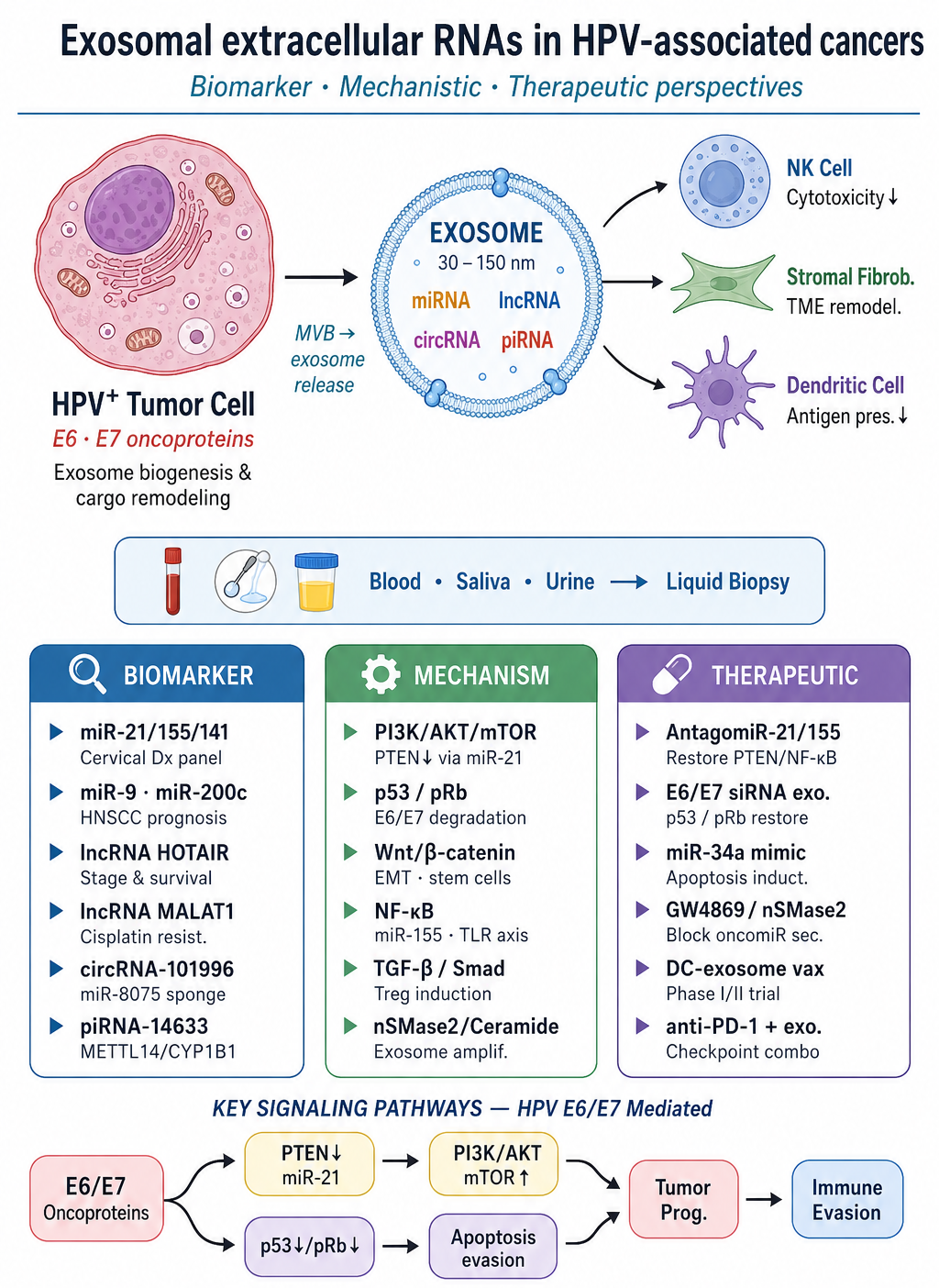
Extracellular RNAs (exRNAs) packaged within tumor-derived exosomes have emerged as compelling candidates for non-invasive cancer biomarkers and active mediators of oncogenic intercellular communication. Human papillomavirus (HPV)-associated malignancies, principally cervical carcinoma and oropharyngeal squamous cell carcinoma, impose a significant global burden for which early molecular detection remains an unmet clinical need. Exosomes released by HPV-positive tumor cells carry diverse RNA species, including microRNAs (miRNAs), long non-coding RNAs (lncRNAs), circular RNAs (circRNAs), and PIWI-interacting RNAs (piRNAs), whose composition faithfully mirrors the molecular landscape of the originating malignant cell. Protected from extracellular nuclease degradation by their lipid bilayer membrane, these RNA species are detectable in peripheral blood, saliva, and urine, conferring amenability to liquid biopsy strategies. This review provides a comprehensive synthesis of the biogenesis and cargo composition of exosomal extracellular RNAs, their diagnostic and prognostic utility in HPV-associated cancers, their mechanistic contributions to tumor progression and immune evasion, and their emerging potential as therapeutic targets and drug delivery vehicles. Integration of exosomal RNA profiling into clinical oncology holds significant potential; however, rigorous prospective validation and methodological standardization are required before clinical translation can be realized.
extracellular RNA; exosomes; human papillomavirus; cervical cancer; oropharyngeal squamous cell carcinoma; microRNA; long non-coding RNA; circular RNA; liquid biopsy; tumor immunity
