
 X
X WeiBo
WeiBo WeChat
 Facebook
 LinkedIn
 Reddit
 Bluesky
Acceleration AI ethics and the Telus GenAI conversational agent
- Volume
- CitationBrusseau J. Acceleration AI ethics and the Telus GenAI conversational agent. Law Ethics Technol. 2026(2):0006, https://doi.org/10.55092/let20260006.
- DOI10.55092/let20260006
- CopyrightCopyright2026 by the authors. Published by ELSP.
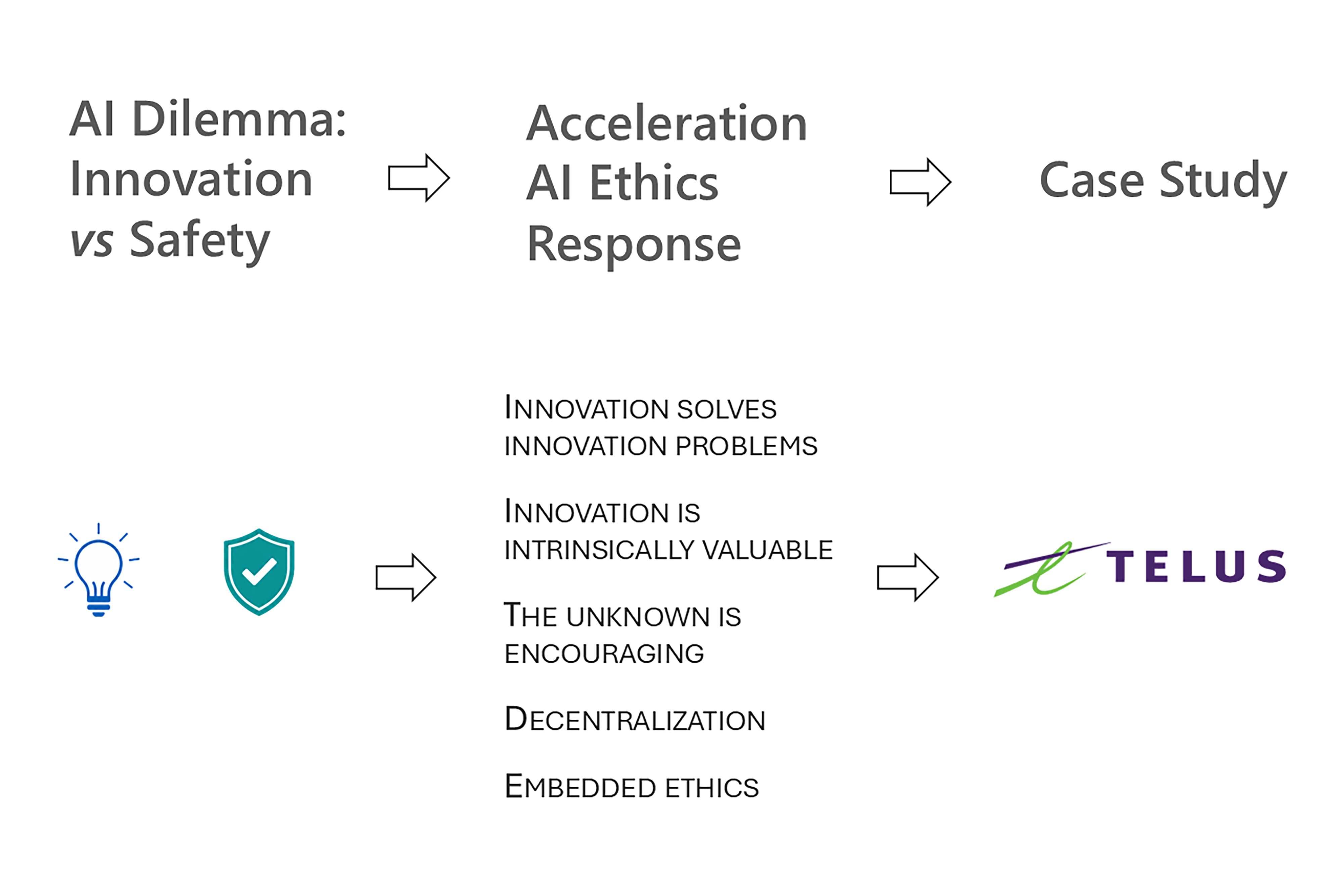
Acceleration ethics addresses the tension between innovation and safety in artificial intelligence. The acceleration argument is that risks raised by innovation should be answered with still more innovating. This paper summarizes the theoretical position, and then shows how acceleration ethics works in a real case. To begin, the paper summarizes acceleration ethics as composed of five elements: innovation solves innovation problems, innovation is intrinsically valuable, the unknown is encouraging, governance is decentralized, and ethics is embedded. Subsequently, the paper illustrates the acceleration framework with a use-case, a generative artificial intelligence language tool developed by the Canadian telecommunications company Telus. While the purity of theoretical positions is blurred by real-world circumstances, the Telus experience documents acceleration AI ethics as a way of maximizing social responsibility through innovation.
generative AI; case study; ethics; acceleration ethics; Telus
