

AI+
ISSN: 3007-7443 (Print)
ISSN: 3007-7451 (Online)
CODEN: AIABDU
Small Language Models: opportunities and obstacles
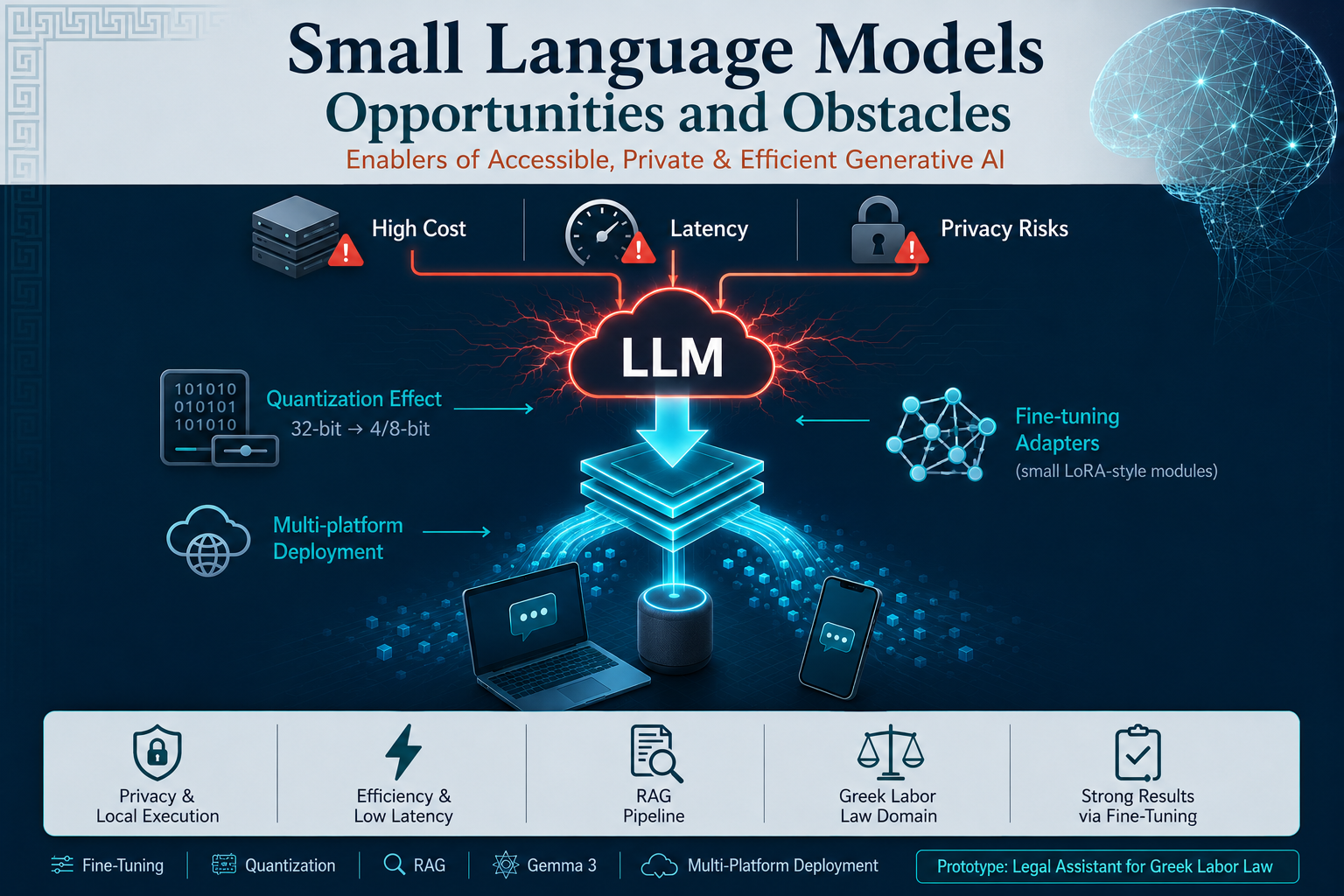
This paper investigates the challenges and opportunities of Small Language Models as efficient, privacy-aware alternatives to Large Language Models in resource-constrained and real-time environments. It elucidates the related basic concepts and combines an up-to-date comprehensive, yet compact, literature review of architectural and optimization techniques for Small Language Models with a systematic experimental evaluation of selected prototype models that integrate fine-tuning, Retrieval-Augmented Generation, and model quantization for multi-platform deployment. It essentially aims to pave the way towards practical implementations that offer measurable improvements over existing methods and can be readily adopted in applied settings.
Artificial intelligence as a clinical tool
Artificial intelligence can now be found in every sector, and the healthcare sector is no exception. In recent years, the use of artificial intelligence in medicine has proliferated, playing a significant role as a diagnostic tool in certain fields. According to this situation, we need to consider how these tools can be integrated into clinical practice and agree on the features they should incorporate. This document proposes a set of characteristics to be addressed, taking into account traditional clinical tools: validity, safety, responsibility, usability, continuous evaluation, transparency and equity.
A survey on omni-modal language models

A survey on omni-modal language models
Small Language Models: opportunities and obstacles
This paper investigates the challenges and opportunities of Small Language Models as efficient, privacy-aware alternatives to Large Language Models in resource-constrained and real-time environments. It elucidates the related basic concepts and combines an up-to-date comprehensive, yet compact, literature review of architectural and optimization techniques for Small Language Models with a systematic experimental evaluation of selected prototype models that integrate fine-tuning, Retrieval-Augmented Generation, and model quantization for multi-platform deployment. It essentially aims to pave the way towards practical implementations that offer measurable improvements over existing methods and can be readily adopted in applied settings.