Renewable and Sustainable Energy

ISSN: 2959-0760 (Print)

ISSN: 2959-0779 (Online)

CODEN: RSEEC9

About This Journal
Latest Articles
View more
Formation mechanism and particle size distribution optimization of large fly ash particles
Jiajun Du,Zixiu Jia,Zhongcan Yang,Yonggang Zhao,Chaoyang Zhu,Yang Bai,Wen Tan,Xilai Zhang,Jiamin Gao,Peipin Wang
Article02 Sep 2026OPEN ACCESS

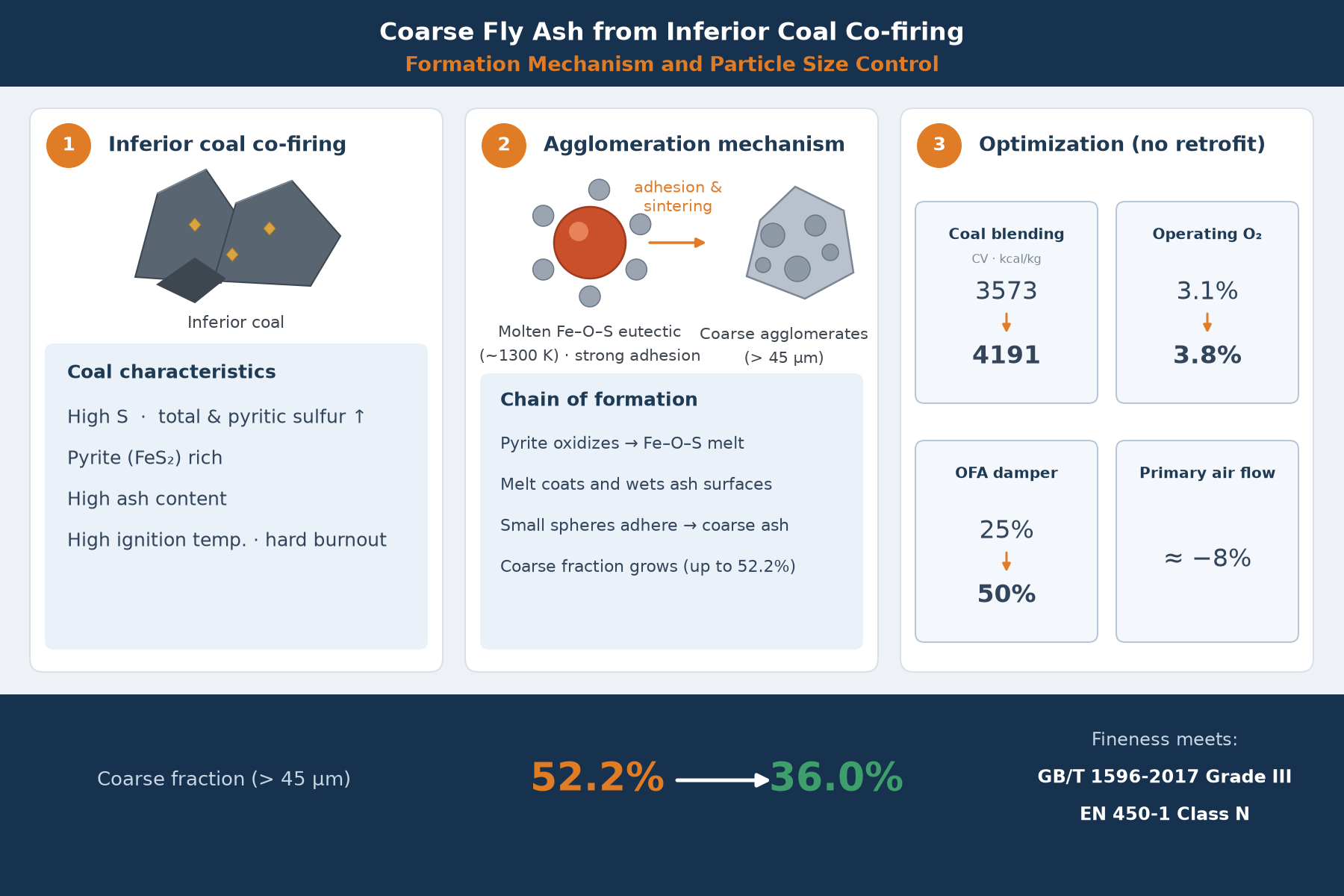
To address the issue of coarse fly ash particles resulting from co-firing inferior coal in utility boilers—which impairs resource utilization and economic performance of power plants—this study conducts laboratory-scale investigations on coal combustion characteristics and fly ash particle size distribution, alongside field tests on coal blending and combustion optimization for a 330 MW unit. The research is approached from the perspective of reducing technical costs while avoiding large-scale equipment modifications. The formation mechanism of large fly ash particles is systematically analyzed, and optimization strategies are proposed. Laboratory results demonstrate that the proportion of coarse fly ash particles exhibits significant correlations with sulfur and pyrite content in coal, fuel ignition temperature, combustion burnout difficulty, and slagging propensity. Higher sulfur content, elevated ignition temperatures (> 680 °C), and lower burnout rates correspond to increased proportions of particles larger than 45 μm (reaching up to 38.5%). The fundamental mechanism involves the adhesion of molten (Fe–O–S) eutectics—formed through the oxidation of iron and sulfur—to other particles, thereby generating larger agglomerates. Field tests indicate that by increasing the as-fired coal calorific value to 4191 kcal/kg, reducing sulfur content to 1.04%, decreasing the proportion of low-reactivity coal, and optimizing combustion parameters (oxygen concentration at 3.8%, reduced primary air flow, and appropriately increased over-fire air opening), the proportion of fly ash particles exceeding 45 μm decreased from 52.2% to 36.0%, meeting the utilization standard for Grade III fly ash. This research achieves the technical objective of reducing coarse fly ash proportions through optimization measures without equipment modification, providing an economically viable solution for the resource utilization of fly ash from utility boilers.
PDF
From prediction to optimization: digital and hybrid approaches for sustainable energy systems
Maurizio Filippo Acciarri
Editorial26 Mar 2026OPEN ACCESS

The transition toward sustainable energy systems is no longer defined only by the deployment of renewable technologies. It is increasingly shaped by our ability to manage complexity. As renewable generation expands across power systems, buildings, and distributed energy infrastructures, the central challenge is not simply producing clean energy, but using it more intelligently, more efficiently, and more flexibly.

PDF
Low-frequency energy harvesting using a counterweighted pendulum for maritime applications
Kacper Wojkowski,Iain Mitchell,Ahmad Serjouei
Article26 Mar 2026OPEN ACCESS

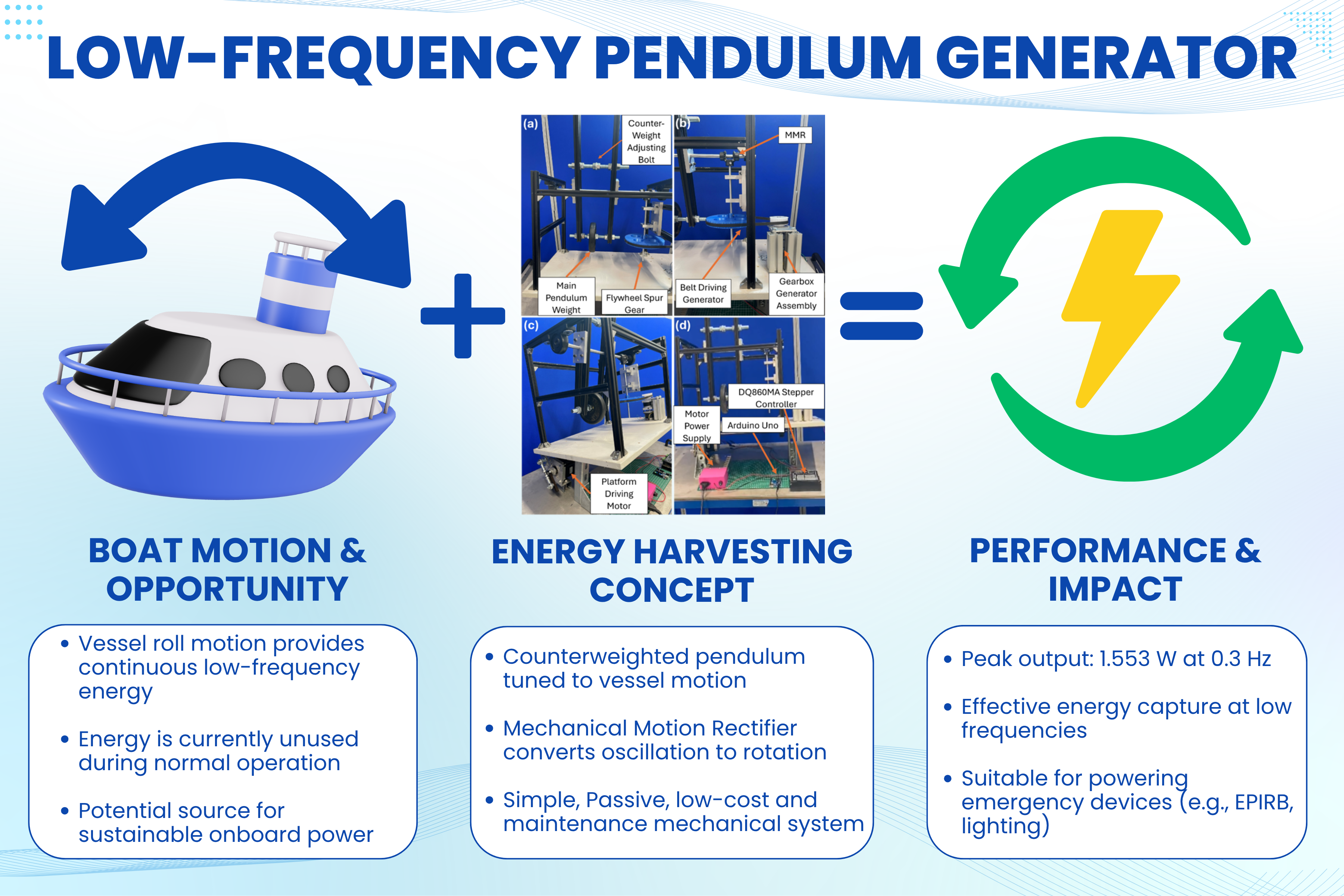
This paper presents the design, development, and experimental evaluation of a low-frequency energy harvesting device based on a counterweighted pendulum system. Targeting maritime applications, particularly as an emergency power source for lighting or homing beacons, the device converts mechanical oscillations into electrical energy using a stepper motor, a mechanical motion rectifier, and a flywheel. A key focus is tuning the system for resonance at low excitation frequencies typical of marine environments. Through a series of controlled tests, the system achieved a peak average power output of 1.553 W at 0.3 Hz using a 3.049 kg pendulum at a 25 cm length. Comparative analysis highlights the efficiency gains from tuning pendulum length, mass, and counterweight placement. The device architecture emphasizes low-maintenance operation, passive actuation, and the use of manufacturable, modular components suitable for scalable production and integration into maritime or industrial platforms. These attributes position the system as a sustainable energy-harvesting solution that can complement hybrid power architectures and contribute to circular manufacturing approaches by reducing reliance on disposable batteries in remote systems. The results demonstrate significant improvements over similar harvesting technologies operating at higher frequencies and lay the groundwork for broader deployment in resilient, sustainable marine systems.
PDF
Top Downloaded
View more
Heading towards low-carbon passenger car mobility: electricity vs hydrogen
Amela Ajanovic,Reinhard Haas
Article10 Jan 2023OPEN ACCESS
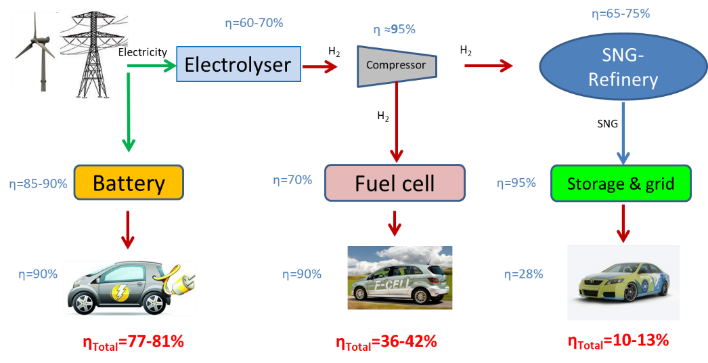
Due to pressing environmental issues, the need to head towards low-carbon mobility is growing. Battery electric- and fuel cell vehicles are considered to be key contributor to the decarbonization of the transport system. The core objective of this paper is to discuss the role of electricity and hydrogen in the decarbonization of passenger car mobility. Firstly, the recent developments, the current state of battery electric and fuel cell cars are described and the major barriers to a broader market penetration are identified. Next, their environmental and economic performance is analyzed in a dynamic scenario up to 2050 for the average of EU-15 countries in comparison to conventional fossil fuels used in internal combustion engine vehicles considering total costs of ownership and possible technological learning, as well as all relevant emissions. The major conclusions are: (i) Battery electric- and fuel cell vehicles could have clear environmental benefits in comparison to conventional cars, if electricity respectively hydrogen used is produced from renewables. (ii) The economic competitiveness of battery electric- and fuel cell vehicles is increasing over time due to technological learning especially regarding the battery and the fuel cells as well as expected prices on CO2. (iii) However, despite the fact that there may be significant progress regarding these alternative automotive technologies, it is obvious that also other strategies are necessary to head towards a sustainable transport sector.
PDF References
Coal-derived porous carbon anodes for Na-ion batteries
Robert Ilango Pushparaj,Xiaodong Hou,Shuai Xu,Xin Zhang,Bellal Abdelmalek,Ruiqing Zhang
Article26 Apr 2024OPEN ACCESS
Developing low-cost and eco-friendly electrode active materials for sodium-ion battery technologies may increase their competency, allowing them to become the next generation of energy storage systems. Low-cost anode materials are urgently required to address this increasing demand. We propose using earth-abundant coal extracted porous carbon anodes prepared via a facile hydro/solvothermal method followed by carbonization at high temperatures. The surface morphology analysis reveals that the hydrothermal carbon (HTC) and solvothermal carbon (STC) samples are randomly aggregated particles with a hierarchical porous structure. Sodium-ion battery tests indicate that the coal-derived anode exhibits stable cycling and high-rate capabilities. The discharge capacity holds 176 mAh/g and 172 mA/g after the 200th cycle at a current density of 100 mA/g, corresponding to the HTC and STC samples, respectively. Voluble products from coal waste-based anodes exhibit remarkable capacities that reduce anode cost and allow us to produce waste to energy for future secondary battery energy storage.
PDF
A review of thermoelectric applications in photovoltaic modules: structure, performance, and optimization
Tao Li,Xinyu Peng,Shiyang Zhou
Review18 Feb 2025OPEN ACCESS
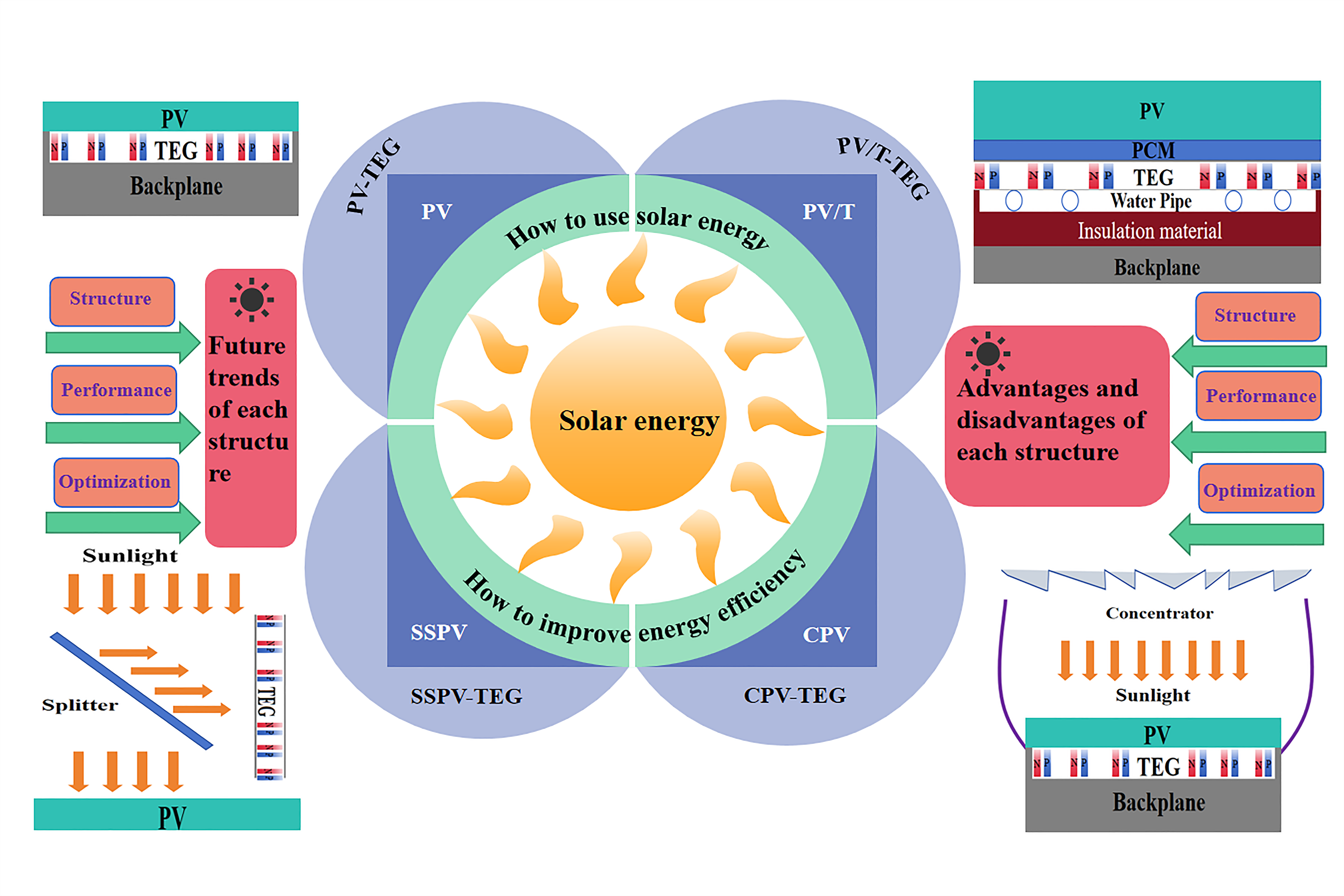
As the demand for renewable energy continues to grow, photovoltaic modules (PV) have attracted much attention as an important clean energy technology. The combination of thermoelectric generator (TEG) with photovoltaic (PV) systems offers significant benefits, such as using waste heat from PV to produce electricity, reducing the operating temperature of PV to extend its service life, and enhancing the efficiency of overall energy use. This review analyzes four main types of structural combinations: photovoltaic hybrid thermoelectric generation components (PV-TEG), split-spectrum photovoltaic hybrid thermoelectric generation components (SSPV-TEG), concentrating photovoltaic hybrid thermoelectric generation components (CPV-TEG), and photovoltaic/thermal hybrid thermoelectric generation components (PV/T-TEG) in order to obtain the latest relevant research developments. The structural design of the coupled system aims to optimize the integration of the TEG with the PV module for enhancing the heat transfer efficiency and power generation performance. The advantages of the PV/T-TEG system, which combines photovoltaic and thermoelectric conversion technologies, are likely to occupy an important position in the future solar energy market. While progress has been made in the application of TEG in PV, the challenges of efficiency, cost, and thermal management need to be overcome, and the opportunity to take advantage of developments in policy, innovation, and market demand will continue to improve performance through structural optimization.
PDF